March Musings
Yuma,
I hope your March has been gentle. If you have been reading the news or buying petrol, it likely hasn’t. I’m sorry. I’m sorry the world is like this.
Thank you for taking some time out of the tumult to read or listen to my little newsletter. It means the world to me to have you here.
If you prefer my dulcet tones, you can listen to the audio version.
A prayer for more rain
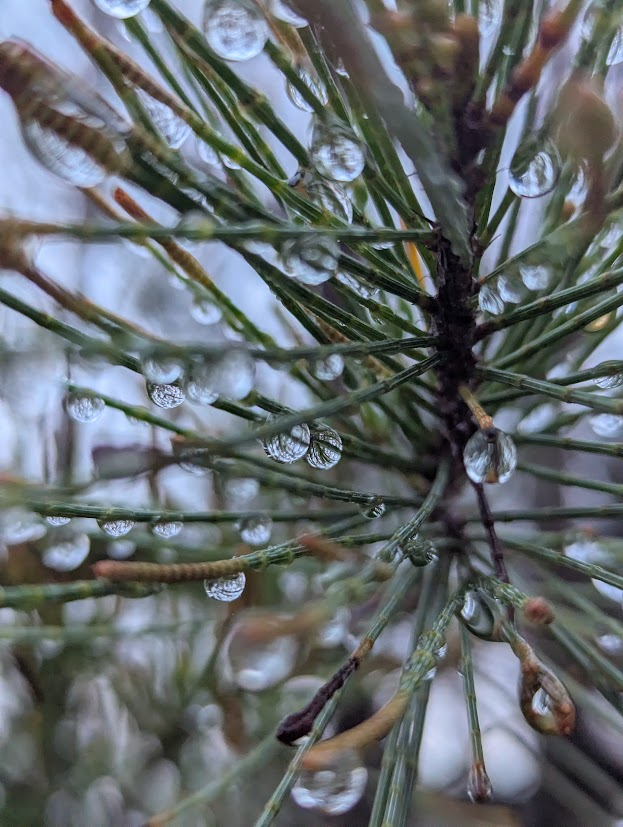
how the ants know when rain is coming
(the way they carry a barometer in their bodies.)
the frogs, their loudness
(I can feel my bones relaxing.)
the plant roots that burrow deeper into the soil
(smell of roots, almost overpowering, woody and muddy.)
the way the land rewrites itself
(a contour map of temporary creeks.)
all those turtles
(come out to amble, stately, across the road. SUVs almost crash trying to avoid them.)
puh-powee
(Potawatomi word, taught to us by Robin Wall Kimmerer. Describes mushrooms coming up overnight. Also describes other nocturnal fruitings.)
other nocturnal fruitings: entangled slugs and snails
(love darts. Tiny jewels littering my kitchen floor.)
the safety of fog
(obscures the madding crowd.)
how I sleep when it is raining when I am hearing smelling tasting it
(deeply.)
Prescription for the end of the world:
let yourself be taught
The memes about the world ending are funny. And it's comforting to see that other people are also feeling the intensity of the moment.
Yet, I think we need to go deeper.
Worlds end all the time. Ecological worlds. Indigenous worlds. Worlds of poor people. Worlds of children in unsafe homes.
All world-endings require grief. All world-endings require survivors to skill up in impossible circumstances.
Right now, the world is ending for a relatively economically stable, mostly white population in the Global North.
And it is very scary. And we have a lot of teachers around us. People who have lived these frightening, devastating endings.
There is an insensitivity to our sudden awareness of the violence and precarity of this system.
And I worry that we are too busy freaking out to look around at the billions of teachers we are surrounded by, and ask them if they would like to teach us.
At a blues dance class recently, I was reminded that the world ended for millions of black people with the middle passage.
That this world-ending was devastating, horrific, and should not have happened.
That this world ending also brought us the blues.
I remembered that I spent much of my twenties learning from the movements that grew out of precarity and collapse.
That these world endings also bring beautiful things among the wreckage. Beautiful things, like the blues, that hold us through the devastation.
I also remembered a key difference between people who have lived through armageddon, and those who haven't: people who have lived through armageddon become exceptional at improvisation.
They invent blues, tango, capoeira. Butoh. Rap. They resurrect dying languages. They discover new migration routes.
I am going to try to stop posting memes about the end of the world.
I am going to watch monarch butterflies learn new migration routes. I am going to watch whole tree populations slowly moving North. I am going to listen to my wiradyuri friends, as they piece their language back together.
I am going to go to blues classes, and learn the gift of how to move with love when the air around me is saturated with grief and fear. I am going to improvise my baby and I into a new way of worlding.
Always was, always will be (Aboriginal Land)
If the end of the world is keeping you up, you might want to read the work of Indigenous Scholar Vanessa Machado de Oliveira, who has been sounding the alarm about the collapse of Modernity’s systems for some time now (Modernity is our current socio-economic system, that is quite dependant on globalised networks of trade, exploited labour, and petrochemicals). She speaks of the need to hospice Modernity: to accept the inevitable, and give our current system a dignified death. She invites us to help midwife the new world, which may not be better, but will certainly be different. While confronting, her work is also humorous, loving, and comforting. Here is a lovely recent podcast interview she did.
Where you can catch me and my work
In a fancy academic publication
In March 2023, I started drafting my first “real” academic journal article. I sent it off to the top journal in my field, Environmental Humanities, expecting to get a desk rejection and learn something in the process. Three years later, it is published in Environmental Humanities, and I learnt a hell of a lot in that process. You can read the article here. Here is my favourite excerpt from the piece:
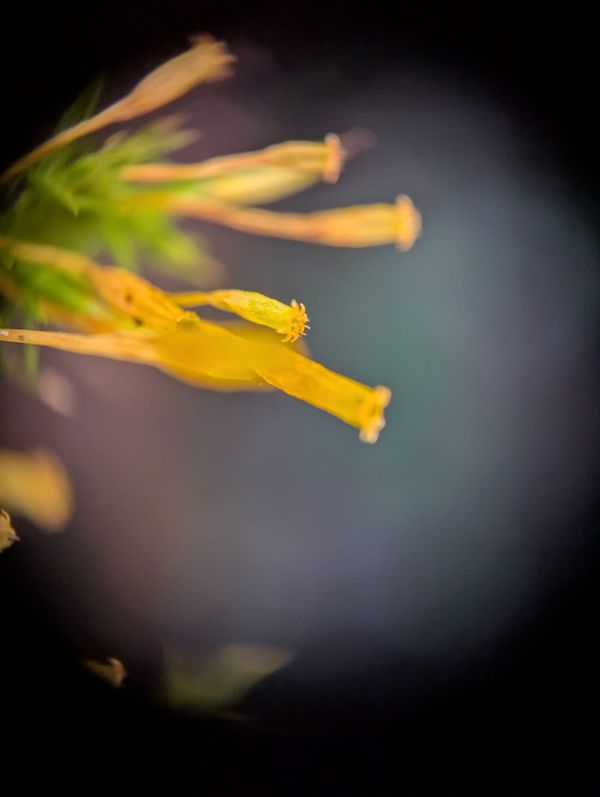
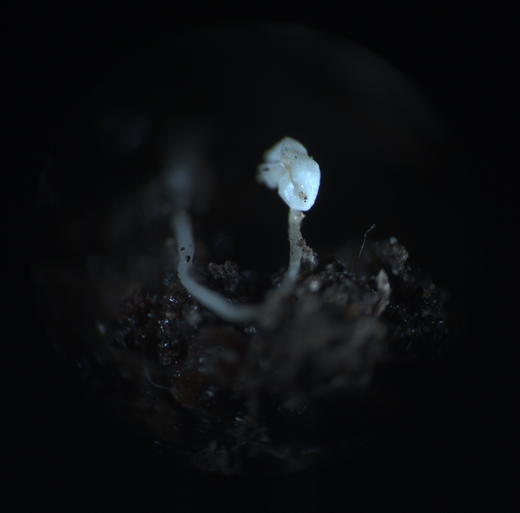
Only the frogs and I are awake. The hills are chilly this early in the morning. I am bundled up everywhere except my feet, which are bare; even with the seasonal threat of frost. As I travel from one site to another, so, too, do a host of microscopic fungi and bacteria, hitchhiking on my feet. When they reach the tree whose humus I am sampling, many of them will burrow down into its soil, feeding off the sugars in the root exudates. During their lives, and long after their deaths, these critters will feed the same roots; the nutrients from their bodies being returned to the soil in plant-available form. In the meantime, life is busy in the top ten centimeters. The bacteria and yeasts I have released into the soil are pursued by a slime mold, specifically a plasmodium; tens of thousands of individual slime mold cells have come together to form one tiny superorganism. Moving at a speed of one millimeter per hour, the super slime mold engulfs and breaks down its microscopic prey. But it is not the slime mold’s day either; tiny infant neanuridae gobble up its edges for breakfast. Simultaneously, both the slime mold and the neanuridae are expelling nutrients that had been previously locked up in hyphal and bacterial bodies; these then become seedling food for the minute eucalypt sprout I will later photograph under the microscope.
Other good things
Buy (or look at) some fucking amazing clothes
I met Jack when I was eighteen, which means that in a few months I will have known him for half my life. This is startling for many reasons. We did the same year twelve Alliance Francaise school holiday intensive, and he was by far the coolest and best dressed person in the room. I’m not really sure why he became or stayed friends with me, but we spent much of that Summer partying, MSN Messengering about creative dreams, and driving around his hometown in a teeny tiny car that was older than both of us.
From the get-go, Jack was clear on what he wanted to do. He wanted to make beautiful clothing, and he particularly wanted to design gorgeous fashion for male and queer bodies. Fashion that could allow masculine bodies to be soft, even when the bodies themselves were lean, or tough, or abnormal. He has done just that.
I was reminded of Jack’s skill when I got to take my best friend Tamuz, and my partner Kass for a little game of dress-ups at Jack’s Studio, the System, a few weeks ago. All the pieces were stunning, and designed with real bodies in-mind. It is particularly hard to get flattering clothing for Kass, as he naturally has a very slight build, and most men’s clothes are designed to hide and bulk the body: Kass swims in everything. Jack makes clothes that show off everybody’s curves: including those blessed with Kass’s lean (some would say “twink”) physique. I was pleasantly stunned by how gorgeous Kass looked in the deltoid top, which is also made of wool jersey, and is therefore a lovely winter layer. I was also in love with how Kass looked in the Opera Silk Gown, a genderfluid show piece that beautifully showed off his clavicle and arms. Jack reminds me that men’s fashion can be beautiful, sensitive, coy, and alluring.
Jack also reminds me that it is possible to adapt clothes to my body, rather than trying to adapt my body to clothes. Together, we’ve worked on a set of trousers for me that allows my usual weight fluctuations, my period bloat, and my desire to crawl through hedges. They fulfill my neurospicy urge to never think much about my wardrobe: they look like officewear, but are hardy enough for landcare work. I wear them almost every day.
Some of Jack’s pieces, including the deltoid top are currently on sale on his website.
Regardless of whether you have the cash to splash on bespoke fashion, you should do yourself a favour, and follow his work on instagram. The world needs craftspeople, and slow beauty more than ever right now.
Do a fucking amazing workshop
My friend Julie Monroe-Allison is a master of sensitive, immersive installations. Her organic, often handwoven forms invite the visitor into a sense of home. A sense of nesting. As I go deeper and deeper into pregnancy, Julie’s works capture me more and more: my own desire to nest, the way my body has become a nest.
Julie’s next piece is inspired by the aerial nests of green ants. And you are invited to help make it. If you are in Canberra next week, you should get yourself to her participatory installation/drop in workshop running April 7-12. I promise this will be both sweet and grounding.
Mutual Aid
My lovely friend Amy is still taking donations for her upcoming gender affirming surgery. The Australian healthcare system (Medicare) covers less than $1000 of the cost of the surgery, despite the fact that these surgeries are often lifesaving, and are the price of a small house deposit. You can help enormously by chucking some money Amy’s way.
We are still looking for a renter for our house! If you or a friend would like to live in a beautiful property twenty minutes from Canberra, with four bedrooms and sweet chickens (who are managed by another occupant elsewhere on the property), you can let me know by replying to this newsletter.
Thank you
If you feel moved by anything in the newsletter, and want to forward it to a friend, that would be so helpful to me.