December Musings
Yuma Friends
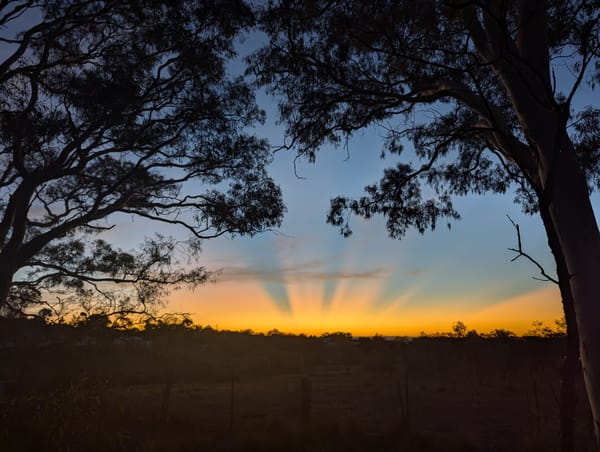
Thank you for meeting me here. Thank you for letting my little writing practice into your home these past few months, and helping me to imagine what a joyful creative practice might feel like. The title, “the Crepuscular Hour” comes from a twice-daily phenomenon: the light just before sunset and just after sunrise.
Those of us in the Southern Hemisphere will experience the crepuscular hour late tonight, so soon after the solstice. The solstices and New Year’s Eve are my favourite holidays: times for imagining openings, shiftings, and life otherwise. It has been a hard few years, full of precarity and doubt. I wish you and yours a gentle, fertile 2026.
Some peoples’ email browsers aren’t loading all the images, links, and videos in the posts. If that’s you, you can also click through to the web version of this newsletter.
For those of you who prefer my dulcet tones to the labour of reading, you can find the audio version of the newsletter here.
Where you can catch me and my work
Loom Literary Journal
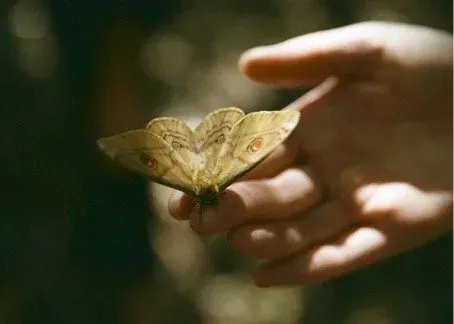
Our piece in the first issue of Loom Literary Journal is now online! Artist Sammy Hawker and I have crafted a lovely little reflection: “Nature’s Active Voice // A Field Report From Plumwood Mountain” The piece details a sonic workshop we ran at Plumwood Mountain: Ecophilosopher Val Plumwood’s home and final resting place. It’s accompanied by Sammy’s stunning photographs.
Prescription for metamorphosis: smell soil
Petrichor. Geosmin. Mitti Attar. Forest bathing. We love to talk about the smell of soil. I have made a home in this scent. I have found ground here. Lean over. Rub some dirt between my fingers. Inhale. Inhale in earth. In earth, I have a touchstone.
But, by the night I bog the van in a mulch pile in the rainforest, I have been severed from the smell of soil for some months. You have reoriented me. Your lengthening and strengthening has rearranged me. You are building a home in me. You are dissembling my bones to build your own. I am your ground. You are mining me for calcium. They tell me you are the size of various fruits. Nose to tail, you are a cumquat, an avocado, a mango. I am your soil, your home.
You are rearranging me. You are metabolising me. Much falls away. Sugar, sleep, skin, sex, soil. I am protecting you from toxoplasmosis: I am not touching soil. I am your ground. I am protecting you. I am not smelling soil. The doctors tell me to wear a mask and gloves while gardening. I am your ground, cut off from dirt, I cannot find my own ground.
I am hungry for the safe scent of humus. I sit outside in the rain, waiting for petrichor. I breathe in moss. I grind geosmin-rich beetroot to a powder, and suspend it in oil, so that I might wear dirt smell on my skin. I crush mountain pepper berries and place them on my tongue, tasting for their spicy soil umami.
There is so much I must not do. I am gently chided for the three drinks I have had since conceiving you. I am told how much weight I can put on. I am reminded not to have too much sugar. I am told not to touch soil.
So many things could happen to you. My little spore. My little seed. My eukaryote. My froglet. My fingerling. My puggle. Too many things could happen to you, and I am told they will all be my fault. I must not sleep on my back. I must not go in a sauna. I must continue to earn money. I must sit in an office, in work appropriate clothes, and pretend that my body is not swelling like tiddalik. I must not get too stressed. I must practice my calming meditations every day. I must not touch soil.
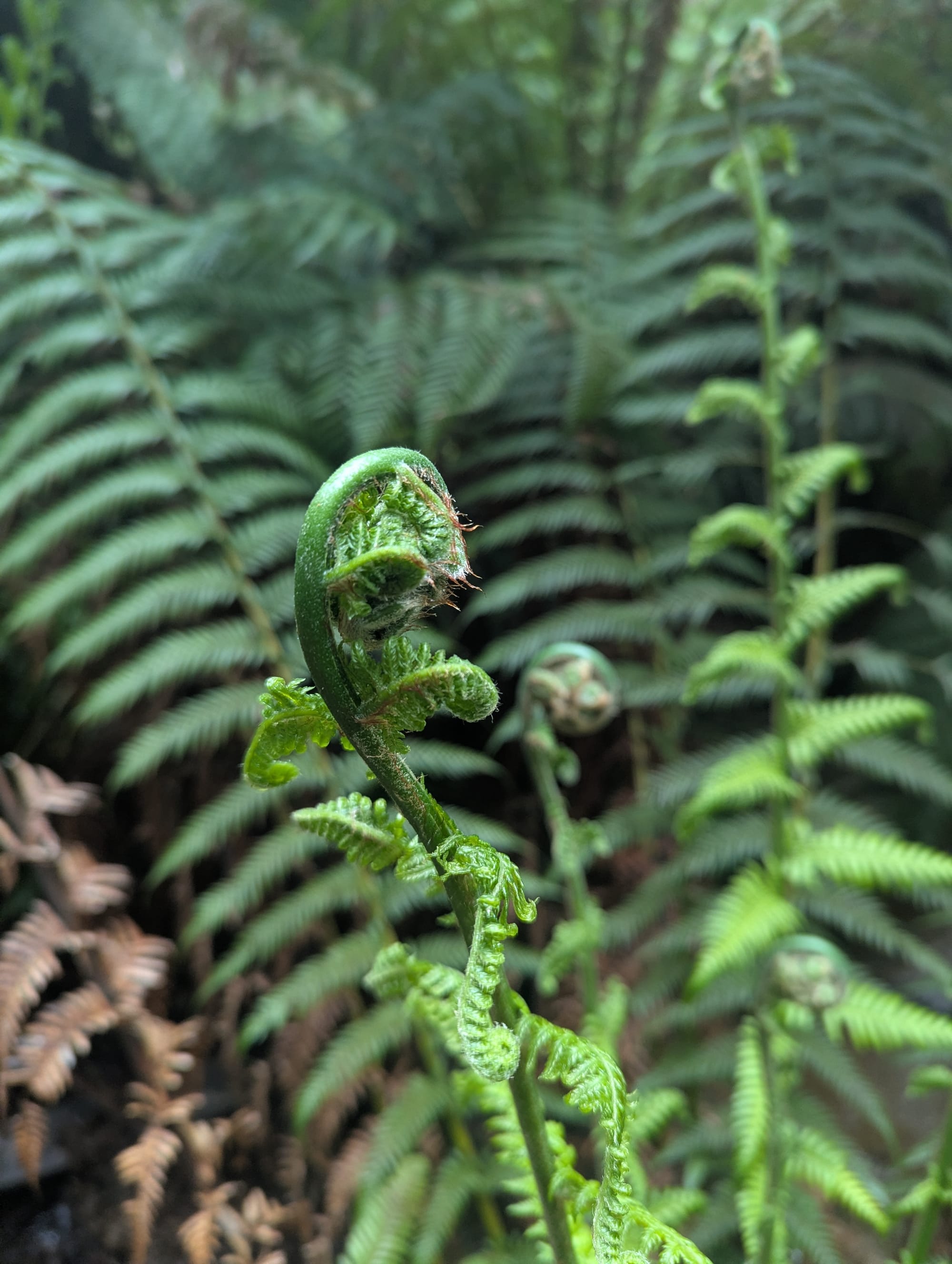
By the time we drive the ten hours south, you and I, I am run ragged. I am dreaming, still, of wet humic rainforest. I am too dry and too far from the earth. I am dreaming of water dripping off ferns and into my mouth, onto my forehead, and into the soil. You are inside me, dreaming too. In the ultrasounds, you are perfect. “How do they dream without language?” I ask the technician.
It is a long drive. It is a drying, exhausting drive. It is a drive far from grounding. While you sleep inside me, a man tries to get into our van at a Stop, Revive, Survive stop. In broad daylight, he awakens me from my nap and begs to come in. At first I think he might be in danger, but after a while, I realise his intentions are more sinister. He has two dogs at his feet. He is begging to come into my bed, in my van. After a few minutes of my refusals, he stands a metre or so outside the door. Watching me for an agonisingly long time, as I get up from bed, put my shoes back on, find my keys. He watches me as my swollen belly emerges from the blankets. I stare back at him like a harpy, a siren, medusa. I get back onto the freeway and do not stop for three hours, despite my perinatal exhaustion. My veins are filled with the poison of adrenaline. I must not get too stressed. I need to ground. I cannot ground.
I take a wrong turn and add two hours to our trip. I am driving through mountain ash rainforest at eleven pm. I am driving through mountain ash forest, and smelling the smell of home: wet dirt. These are the forests that called me to protect them when I myself was little more than a spore. These are the forests that woke me up when I myself was barely a fingerling. I am still full of poison: anger and fear sharpening my exhaustion. I want to pull over and lie down in the wet earth, but I must protect you from toxoplasmosis, and besides, I have already been reminded once today that the world outside the van contains men who may want to hurt us.
By the time I arrive at the bush conference, I am utterly churned. It is past midnight. I am desperate to sleep. A tractor has laid the mulch pile with two neat wheel tracks down its centre. In the monochrome of night, it is indistinguishable from the road. I do not notice it until I discover that the van is utterly, unfixably, bogged. I open the windows and the smell holds me: mulch, soil, home.
I am trapped. I have trapped myself. But I am trapped in the smell of rot, humus, matter, safety. The night is a spray of bright stars. I open the door to go to the bathroom, and my bare feet sink deep into that smell petrichor. Geosmin. Mitti Attar. Just by being here, I am forest bathing. I will have to scrub my feet later, but for now, I am home.
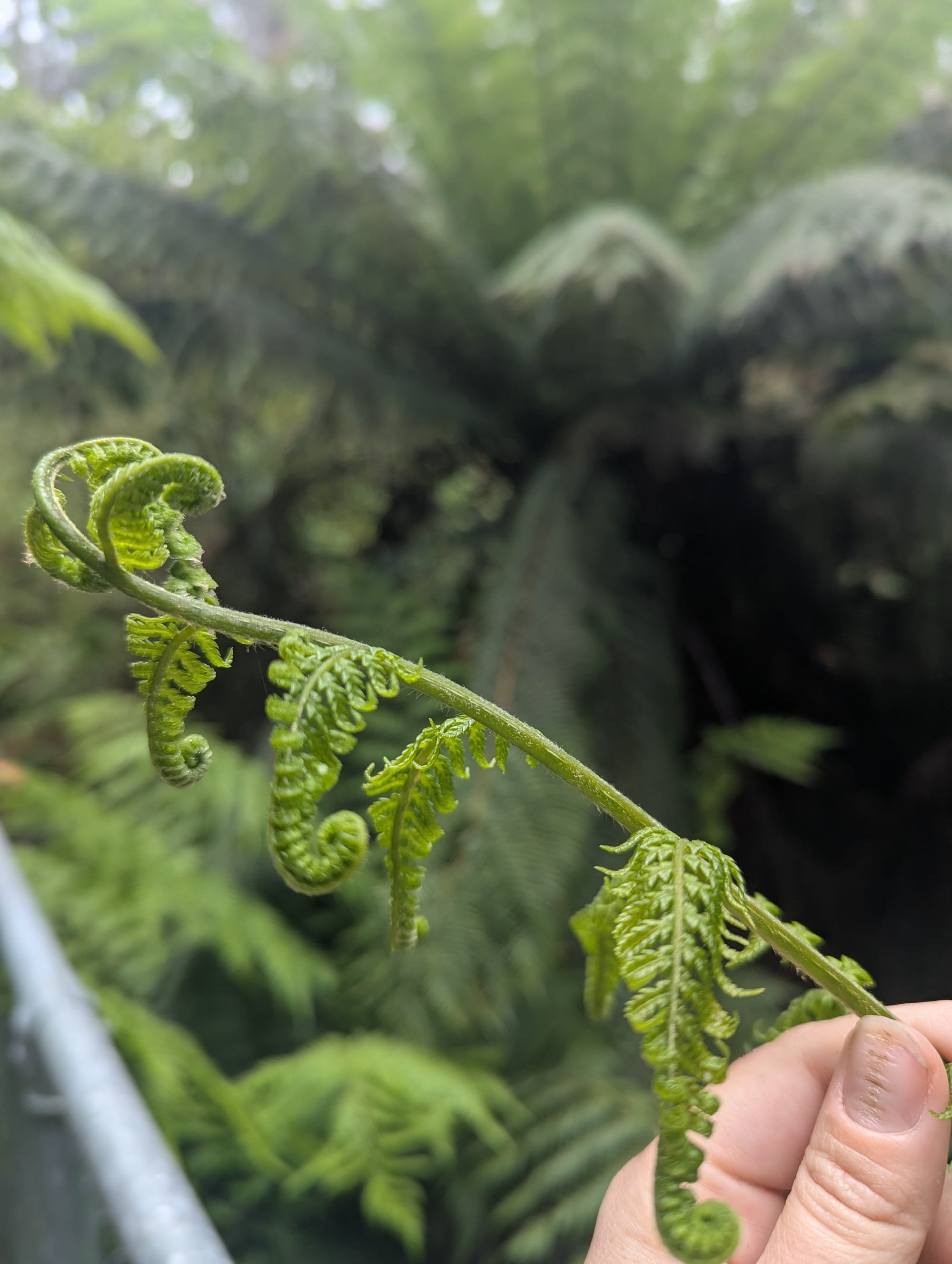
You can also read a little post about my return to the rainforest over here, on my instagram.
What I am wild harvesting right now
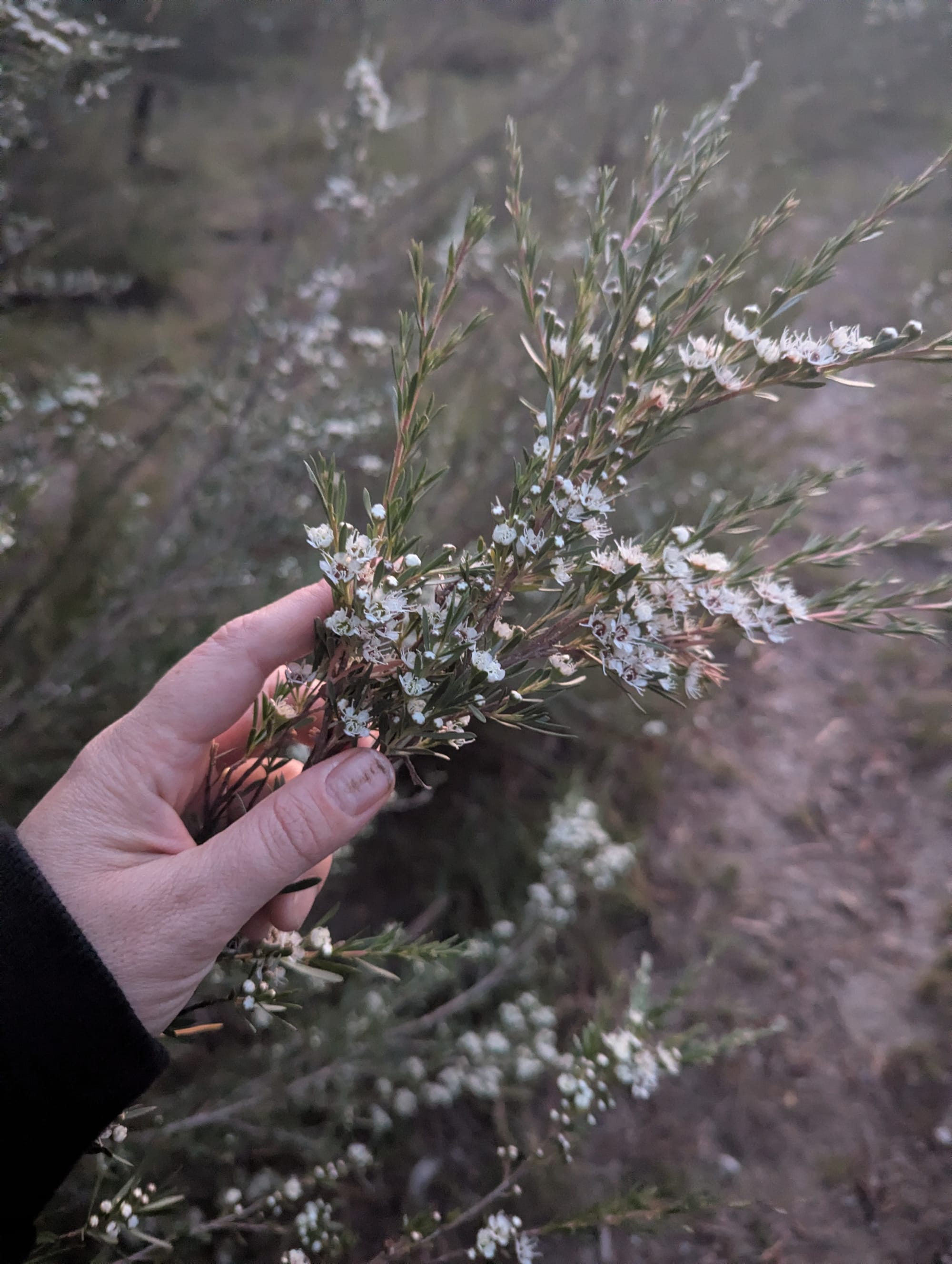
Scents, again I am harvesting scents. In the lead up to Christmas, we had a strange and luscious monsoonal week, and I was once again ensconced in my geosmin, my petrichor. But this was a blend, a perfume. Mixed with kunzea, the soil smells were floral, tonic. There is a forest of kunzea that rims the largest walking track on the property. It does not flower every year, but when it does: honey, menthol, pinene, eucalyptol, limonene. You wait until it rains, you wait until the rain is ceasing: just small drops. You walk downhill, and in rolling waves you smell: rich thick honey, clear grass and rain, sharpness.
After my recent adventure to the ethnobotany conference in the Victorian rainforest, I am finding myself allergic to ways of thinking about natural medicines that do not conceptualise ecologically. I mean ecologically in all senses: in terms of the plants that grow around a medicine; in terms of where and how a medicine has been traditionally ingested by the Indigenous Scientists and Cunningfolk who have experimented it for centuries or millenia; in terms of how many ingredients go into a medicine traditionally; in terms of a medicine’s soil; in terms of a medicine’s soul. It seems to me that the West has an obsession with extractions and synthesis that is an extension of the general colonial mindset: we cut to the core of the thing; we extract the most “productive” part of the thing; we assume the context is all extraneous.
Bear with me on this one, because it is a new thought inside me. It is a bubbling thought that is not yet clear, but it goes something like this: medicines need all their ecologies. Their cultural, soil, niche, plant neighbour ecologies. Our obsession with medicinal purity in the ethnobotany space has started to give me an eerie feeling: I think of the 2006 film Perfume, how our fixation with purity ends in murdering virgins and distilling them in vats. I think of the recent court case in which settler farmer John Hood took five other essential-oil related businesses to court over their kunzea oil–how he claimed the Intellectual Property over kunzea’s topical medicinal qualities despite it being a long-known medicine plant in Aboriginal Science. I think of the way that Australian psilocybes (magic mushrooms) are being synthesised without any royalties being paid to the First Nations people on whose land they are found. I think of all those who take psilocybes at a party, outside of the warm, empirical womb of ancestral ceremony, and whose minds and bodies break.
One of my art school teachers (who, incidentally, turned out to be a sex pest) once told me that my main flaw as an artist is my lack of desire to distill an experience or a concept to its essence. “There are too many ideas here!” all my teachers say, exasperated. I’m not sure I want essences anymore, at least, not in the way I was taught them. Not in the obsession with distilling until nothing contextual is left. I want the funk and rot and complexity of context. I want a compost, I want an infusion.
We may be leaving our home soon, renting it out and living with family for a while so that we can afford to spend as much time as possible with this baby we are growing. I am excited to step back from the daily grind. I am excited to walk different hills, to learn different plants. I am also heartbroken to leave, however temporarily, this land that has shown my Cancer heart home. How can I take some of its medicine with me, without essentialising? How can I carry through the richness of this context?
My beetroot oil smells like the rain and soil of Wamboin, as do tiny teaspoons of the soil itself. I am filling a jar with kunzea flowers, I am covering them with my beetroot oil, I am mixing in a teaspoon of soil. I am crushing in a eucalyptus leaf from the same grove. I am waiting for them to infuse.
Always was, always will be (Aboriginal Land)
If you are interested in learning more about Kunzea, Warndu, an Indigenous-owned food business has a lovely explainer.
It is very easy to buy scents that are infused or distilled from native plants. It is surprisingly hard to buy them from First Nation’s businesses. Wurrumay Collective in Braddon, Canberra, stocks lots of lovely products containing native plant oils.
Thank you,
If you feel moved by anything in this newsletter, and want to forward it to a friend, that would genuinely help my practice grow.
If you feel touched by anything in this newsletter, please feel invited to hit reply. I'd love to hear what your New Years wishes are!
Love and solidarity,
Flo Sophia Dacy-Cole